
The Moment You Notice It
You hit the button on your way out, watch the door start down, and then it stops a foot from the floor and climbs right back up. Or maybe it touches the ground, bounces, and reopens like it hit something invisible. Or nothing happens at all — you press the remote, the light on the opener blinks a few times, and the door just sits there. Whatever the exact pattern, it's the kind of thing you notice at the worst time: leaving for work, getting home in a downpour, or trying to close up before a storm rolls in off the coast.
The good news is that a reversing or non-closing door almost always points to one of a short list of causes, and most openers built in the last fifteen years will tell you roughly where to look if you know what to watch for.
What the Symptom Is Telling You
- Reverses just before touching the floor: usually a sensor, limit setting, or track issue, not a safety obstruction.
- Touches the floor, then reverses: almost always the down-force or limit setting is off, or something is physically in the way.
- Won't move at all, light blinks on the opener: a safety sensor is blocked, misaligned, or not communicating.
- Moves a few inches then stops dead: often a track obstruction, bent track, or a roller that's seized up.
The Causes, in the Order a Technician Checks Them
1. Safety Sensors (Photo Eyes)
This is the first stop for almost any closing complaint, because it's the most common cause and the easiest to rule out. The two small sensors near the bottom of the tracks have to be aimed at each other precisely. If one gets bumped, if a spiderweb or dust crosses the beam, or if morning sun hits the lens at the wrong angle, the opener will refuse to close or reverse mid-cycle as a safety measure. In humid South Florida air, condensation and a thin film of salt residue can build up on the lenses near the coast, which has the same effect as dirt. The fix is usually cleaning the lenses, re-aiming the brackets so both indicator lights glow solid, and tightening the mounting screws so they stay put.
2. Sensor Wiring
If the lenses are clean and aligned but the indicator lights still flicker, the wire running between the sensors and the opener may be damaged. Rodents chew through insulation, and corrosion creeps into connectors over time, especially in garages that stay humid. A technician checks continuity, replaces frayed sections, and reseats the connections at the opener head.
3. Track Obstructions or Misalignment
Next comes a physical inspection of the tracks for debris, dents, or a section that's pulled away from the wall. Humidity swings common to this area can cause wood or composite door panels to swell slightly, which changes how the door rides in the track. A door that was fine in the dry season can start binding once the afternoon storms set in. The fix ranges from clearing debris and tightening track brackets to realigning a track that's shifted out of parallel.
4. Close-Force and Limit Settings
Openers are programmed with a limit for how far the door should travel and how much resistance it can meet before the opener assumes it hit an obstacle and reverses. If the door's weight has changed — from moisture swelling a panel, added insulation, or a new opener that wasn't calibrated to the specific door — those settings can be off even though nothing is broken. Adjusting this means resetting the down-limit and force dials or digital settings to match how the door actually moves now, not how it moved when it was first installed.
5. Rollers and Hinges
Salt air speeds up corrosion on steel rollers and hinge pins, and a rusted roller can create just enough extra drag to trip the force sensor. This shows up as a door that struggles at the same spot in its travel every time. The fix is lubrication with a product made for garage door hardware, or replacing rollers that have pitted or seized.
6. Spring Tension
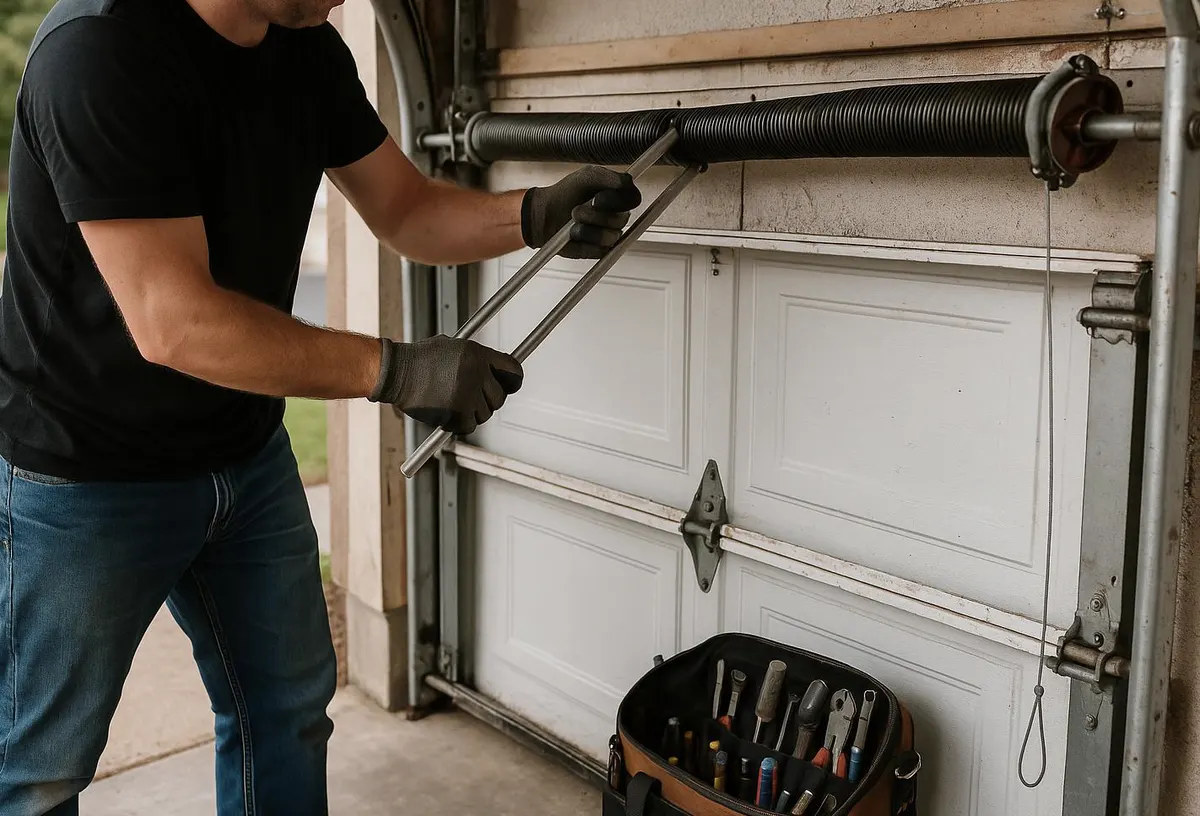
If the door is heavier on one side than it should be, the opener has to work harder to move it, and that extra strain can trigger a reversal even with sensors and tracks in good shape. Springs weaken gradually, and the stress of a hurricane season — doors cycling under wind load, humidity swings, and temperature changes — can accelerate that wear. This is not a DIY adjustment; it requires a technician to rebalance or replace the springs under controlled tension.
7. The Opener's Logic Board
If every mechanical piece checks out and the door still won't behave, the circuit board inside the opener itself may be failing. Moisture exposure over the years, surges during storms, or simple age can cause erratic signals. At that point the opener itself, not any single part, needs replacing.
When to Call Aventura Garage Door Service
If you've cleaned the sensor lenses and the door still won't close, or it's stopping and reversing at the same spot every time, it's worth having someone look at it before the next round of storms rolls through. Aventura Garage Door Service handles Off Track Door Repair when a track has shifted or a roller has failed, and Garage Door Maintenance & Tune-Up when the issue turns out to be a combination of small things — corrosion, misalignment, worn hardware — that add up to a door that won't behave. We check the whole system in the order above so you're not guessing or replacing parts that were never the problem.
If your garage door in Aventura, FL is reversing, stalling, or refusing to close, call Aventura Garage Door Service and we'll get it working the way it should.