
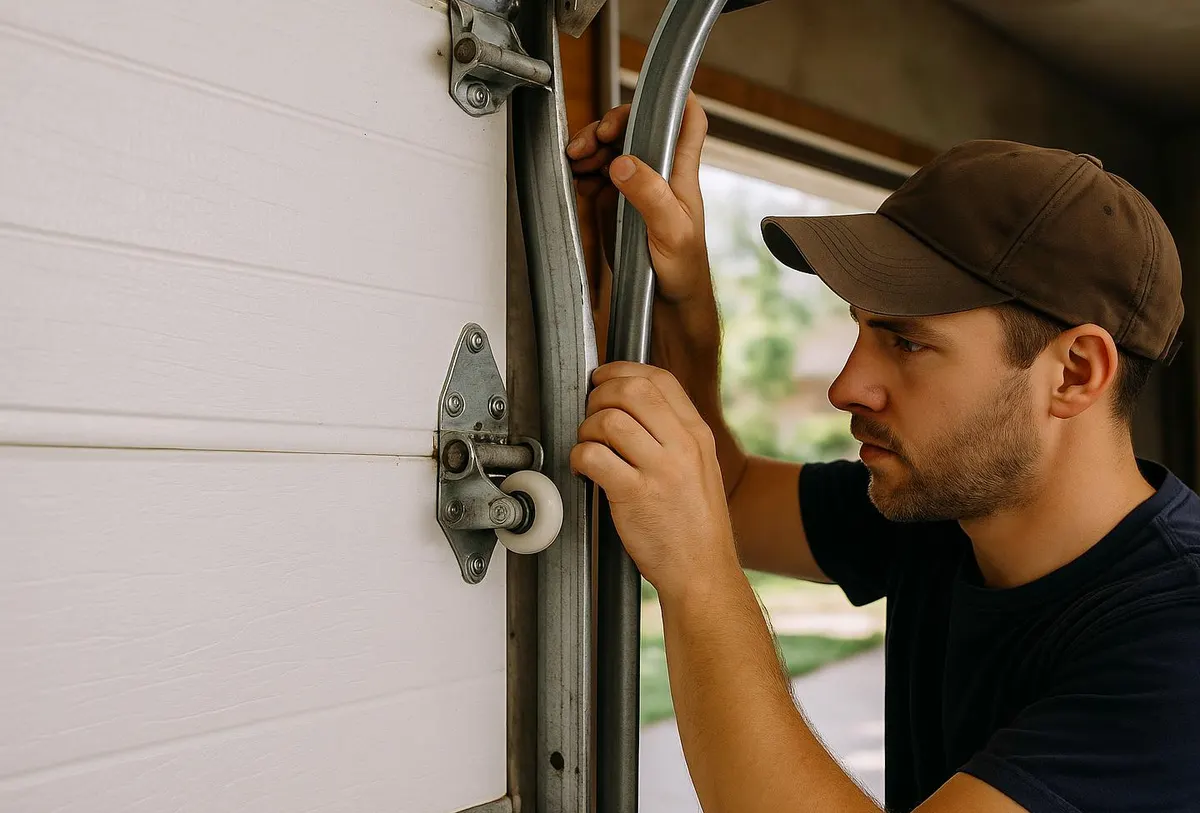
What a Technician Sees on This Call
The call usually starts the same way: "My opener just died" or "the door is making a grinding noise and reversing halfway up." The homeowner assumes the opener motor failed on its own. More often than not, the real problem started months earlier with a spring that lost tension, slowly throwing the door out of balance. The opener kept compensating, working harder with every cycle, until the gears stripped or the motor burned out. In homes near the coast, salt air speeds up spring corrosion, and the heat and humidity common here can cause wood or composite panels to swell slightly, adding extra drag the opener has to fight. By the time the opener fails, the spring issue has usually been building for a while.
Why Balance Matters More Here Than You'd Think
A properly balanced garage door should move on its tracks with almost no resistance, held in place by spring tension, not the opener. When a door is unbalanced, the opener's motor and gears take on load they were never designed to carry. In a climate with hot, humid summers, salt exposure near the water, and wind-load-rated hardware doing double duty during hurricane season, springs and rollers already face more wear than they would inland. An unbalanced door speeds up that wear on everything downstream: the opener, the cables, the track, and the rollers.
Tools You'll Need
- Work gloves
- A step stool (if your manual release cord is high)
- A flashlight
- Nothing else — this test does not require touching the springs
How to Test Garage Door Balance, Step by Step
- Close the door completely. Start from a fully closed position so you can watch the door's movement from the bottom.
- Locate and pull the manual release cord. This is usually a red handle hanging from the opener trolley. Pulling it disconnects the door from the opener so you're testing the door and springs alone, not the motor.
- Lift the door manually about halfway, roughly waist height. Do this slowly and use both hands.
- Let go and watch what happens. A balanced door will stay in place, or drift down just an inch or two before settling.
- Note any fast or uneven movement. If the door drops quickly, slams down, or lifts back up on its own, the springs are no longer holding proper tension.
- Repeat the test at the one-third and two-thirds positions. Some doors are balanced at one height but not another, which points to a worn section of track or a cable issue rather than just the springs.
- Reconnect the opener by pulling the release cord again (or following your opener's reconnect instructions) once you're done testing.
What the Results Mean
If the door held steady at every height, your balance is fine and any opener issues you're having likely trace back to the opener itself, the sensors, or the track alignment. If the door dropped, crept upward, or felt noticeably heavy to lift by hand, the springs are doing less of the work than they should. That's the point where the opener motor starts absorbing the difference. Left alone, this typically shows up as the opener straining on every cycle, the door reversing partway through its travel, or premature failure of the opener's drive gear, sometimes well before that unit would normally wear out.
What a Homeowner Can Do vs. What Needs a Technician
The balance test itself is safe and something any homeowner can do. So is a visual check: look at the springs above the door for visible gaps between coils, rust streaks, or a spring that looks stretched compared to its pair. You can also listen for grinding or popping sounds during operation and check that rollers move smoothly without catching.
What you should not do is attempt to adjust spring tension yourself. Garage door springs, especially torsion springs, are wound under extreme tension and are one of the few home repairs where a mistake can cause serious injury. Spring adjustment, replacement, and cable work require the right bars, clamps, and technique, and they're a job for a trained technician, not a weekend project.
When to Call Aventura Garage Door Service
If your balance test shows the door isn't holding its position, or if you're already hearing the opener strain, grind, or reverse unexpectedly, it's worth getting it looked at before the opener itself fails. Our technicians check spring tension, cable condition, and track alignment as part of Garage Door Spring Repair, and if the opener has already been damaged by months of overwork, we can evaluate whether it needs repair or a full Garage Door Opener Installation. Given the extra wear that heat, humidity, and salt air put on hardware in this area, catching an imbalance early is usually the difference between a quick spring adjustment and a full opener replacement.
If your garage door failed the balance test or the opener's been working harder than it should, call Aventura Garage Door Service. We serve Aventura, FL and the surrounding communities, and we can usually get a technician out fast.