
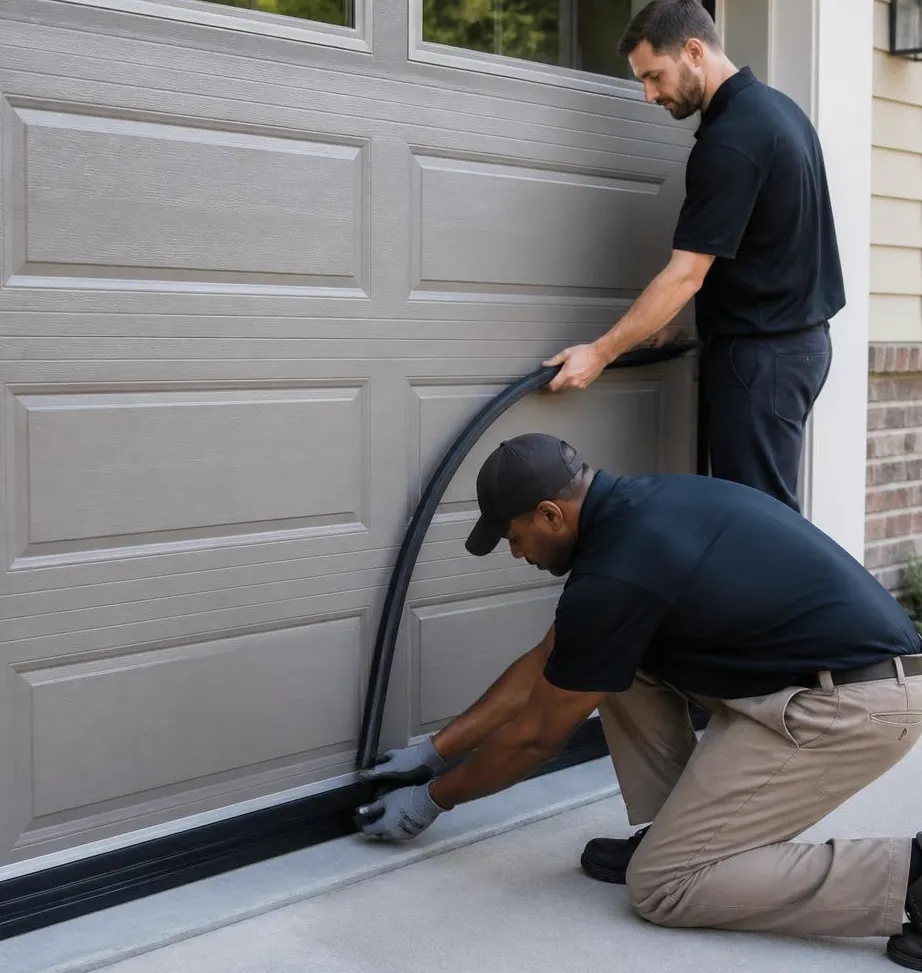
The Argument Probably Starts With a Gap Under the Door
You're halfway through a workout on the new gym flooring when you notice daylight leaking under the garage door, or your foot lands in a puddle after yesterday's afternoon downpour. Your spouse says the door is fine, it's always been like that. You say it's new, because you never used to notice it before the treadmill went in. You're both a little right, and that's the argument worth settling.
Converting a garage into a room, gym, or workshop doesn't touch the door itself most of the time. What changes is everything around it: the flooring, the insulation, the airflow, and how much you're actually paying attention to a door you used to just open and forget.
What Actually Changes When a Garage Becomes a Room
A few common renovation moves quietly affect how the door performs:
- New flooring or a leveled slab can raise the floor height just enough that the bottom seal no longer meets it evenly, leaving a gap at one end.
- Added shelving, racks, or equipment near the tracks becomes something to bump, which is one of the most common causes of a door jumping off track.
- A mini-split or window unit changes airflow and humidity inside the space, which affects how much moisture collects on the door's interior face overnight.
- Drywall or insulation added to the door panels themselves adds real weight, sometimes more than people realize.
None of this means the door is broken. It means the door is now operating in a different environment than it was designed for on day one.
The Weight Problem Nobody Thinks About
If you added insulation panels, foam board, or any kind of backing to the door to help with temperature control, the door is heavier than it used to be. The springs were tensioned for the original weight, and the opener was sized for it too. A heavier door run on the same springs wears them out faster and makes the opener work harder on every single cycle. You'll usually hear it before you see it: more strain in the motor sound, slower travel, or the door hesitating partway up. This is also when garage door openers start burning out chains or stripping gears years earlier than they should, because they're quietly overworked every single day.
Sealed Tight Isn't the Same as Sealed Right
This is usually where the real disagreement lives. One person wants the space sealed up tight for the AC to work efficiently; the other has a vague sense that a garage door needs to breathe. Both instincts have a point. Weatherstripping and a good bottom seal are genuinely worth maintaining, especially with South Florida's humidity and the wind-driven rain that comes with hurricane season. But fully sealing a space that used to vent naturally can trap moisture against the back of the door and the metal hardware, which is exactly how rust gets started on tracks, hinges, and springs, especially this close to the coast with salt air in the mix. The fix isn't to leave gaps everywhere, it's to keep the door's moving hardware clean, lubricated, and checked a couple of times a year so trapped humidity doesn't turn into a corrosion problem you can't see until a spring snaps.
Wind-Load Rating Still Matters, Even Indoors
It's easy to forget that a garage door used for a home gym or office is still an exterior wall. If the original door was swapped out, modified, or had a window or vent cut into it during the renovation, it's worth confirming the replacement or modification still carries the same wind-load rating as the original. That rating exists because this door faces storms the same way the rest of the house does, regardless of what's happening behind it.
When to Call Aventura Garage Door Service
If your converted space has you noticing gaps, slow movement, rust spots, or a door that feels heavier than it used to, that's the right moment to get it looked at rather than argued about. We handle Garage Door Maintenance & Tune-Up visits that catch humidity-related wear on tracks and hardware before it turns into a stuck or off-track door, and we handle Garage Door Opener Installation when a renovation has added enough weight that the current opener is working past what it was built for. Either way, we'll tell you straight whether it's a quick fix or something bigger.
If your garage-turned-gym, office, or workshop has you second-guessing the door, call Aventura Garage Door Service. We serve Aventura and the surrounding South Florida area, and we'll get it sorted the right way, the first time.